I remember vividly the frustration of a dead toaster oven just before a big family brunch. The thought of tossing it and buying a new one, adding to landfill and my wallet’s woes, felt wrong. That incident, years ago, sparked my journey into understanding basic electrical appliance repair techniques for home environments. What I discovered is that many common household appliance issues aren’t complex electrical nightmares but rather simple, fixable problems. With a bit of knowledge, the right mindset, and an unwavering commitment to safety, you too can extend the life of your beloved gadgets, save money, and gain a profound sense of accomplishment. It’s about empowerment, not just repair.
Safety First – Always Unplug!
Before you even think about touching a screwdriver, the absolute golden rule of basic electrical appliance repair is safety. I cannot stress this enough: electricity is unforgiving. A momentary lapse in judgment can lead to serious injury or worse. Always assume an appliance is live until you have personally verified it is unplugged from the wall socket. Furthermore, if the appliance is hardwired, ensure the corresponding circuit breaker is off and ideally, tagged to prevent accidental reactivation. This isn’t just a recommendation; it’s a non-negotiable prerequisite for anyone venturing into DIY repairs at home.
- Appliance Investment: Maximizing Long-Term Value & Cost Efficiency
- Budget vs. premium power tools: A real-world durability and performance deep dive
- Basic electrical appliance repair: Simple DIY fixes for broken cords, fuses, and switches
- Cordless Tool Efficiency: A Battery Technology Comparison for Optimal Performance
- Common Appliance Failures: Troubleshoot & Fix Them Fast
Beyond simply unplugging, arming yourself with the right safety gear is paramount. Insulated tools are a must-have for any interaction with electrical components, even when you believe the power is off. Heavy-duty work gloves can protect against sharp edges and minor electrical shocks, though they are not a substitute for proper power disconnection. Always work in a dry environment and avoid standing on damp floors. Taking these precautions dramatically reduces risk, allowing you to focus on the repair task at hand with confidence, knowing you’ve done everything possible to protect yourself.
The Art of Troubleshooting Common Issues
Effective troubleshooting is less about arcane knowledge and more about systematic deduction. When an appliance fails, resist the urge to immediately assume the worst. Start with the simplest checks: Is the appliance plugged in? Is the outlet working (test with another device)? Has a circuit breaker tripped or a fuse blown? These seemingly obvious steps often resolve a surprising number of “broken” appliance dilemmas, saving you time and the expense of unnecessary parts or professional service. It’s a methodical approach that pays dividends every single time.
Once you’ve confirmed power supply, the next step involves a thorough visual inspection. Look, listen, and even smell for clues. Are there any visible scorch marks, melted plastic, or frayed wires? Can you hear any unusual buzzing or grinding sounds? A burning smell is an immediate red flag, indicating an overheating component. Gently shaking an appliance might reveal a loose connection or a dislodged part. These sensory observations, combined with a bit of patience, often point directly to the source of the problem, guiding your repair efforts efficiently and effectively.
Simple Fixes for Everyday Appliances
Many common small appliances, like toasters, blenders, or coffee makers, often suffer from surprisingly simple issues. A toaster might stop working due to crumbs jamming the mechanism or a faulty thermal cutout switch. Blenders often fail because of a stripped coupling or a worn-out drive gear. These are typically mechanical failures or minor electrical disruptions that, with careful disassembly and a replacement part readily available online or from a manufacturer, can be fixed relatively easily. It’s truly satisfying to bring a beloved kitchen gadget back to life with minimal effort.
Replacing a Blown Fuse or Tripped Breaker
A very common and easily rectifiable issue is a blown fuse or a tripped circuit breaker. Fuses are designed to be sacrificial links, protecting the appliance from overcurrent. If an appliance suddenly dies, check its internal fuse (if accessible and safe to do so) or your home’s main electrical panel. To replace a fuse, always ensure you use one with the exact same amperage rating; never use a higher-rated fuse, as this bypasses the safety mechanism. For a tripped breaker, simply toggle it completely off, then firmly back to the ‘on’ position. If it trips again immediately, there’s a deeper issue requiring professional attention. You can find more detailed guidance on home electrical safety from reputable sources like the National Fire Protection Association (NFPA).
Understanding Basic Electrical Components
At the heart of nearly every electrical appliance are a few fundamental components: the power cord and plug, switches, heating elements, and sometimes a motor. The power cord and plug are often the first points of failure, suffering from wear, cuts, or loose connections. Switches can become faulty, failing to make contact or staying permanently open/closed. Heating elements, found in toasters, ovens, and kettles, can burn out. Understanding the basic function of these parts allows you to pinpoint problems. For instance, if a kettle isn’t heating, the element is a prime suspect.
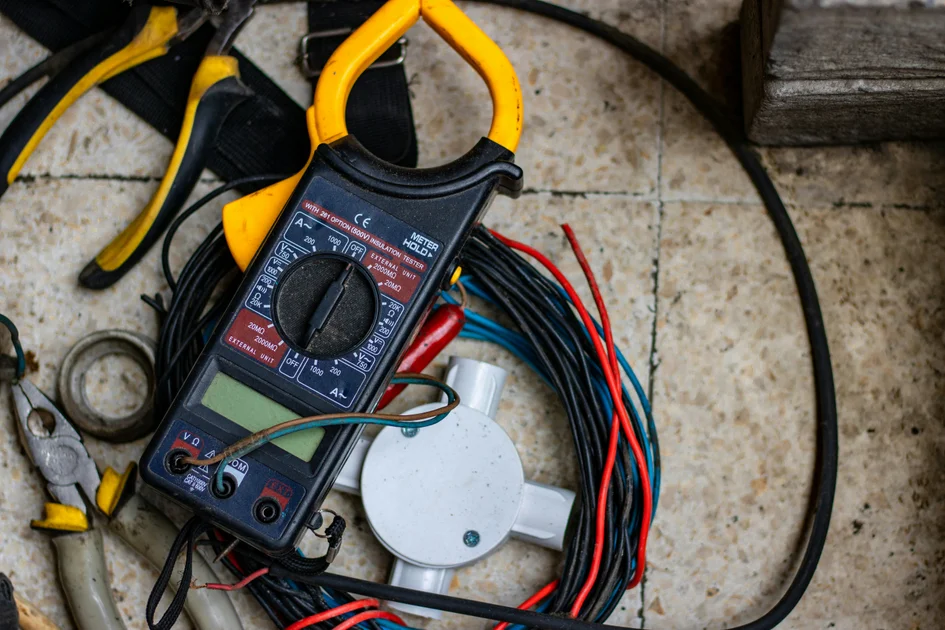
While complex circuitry is best left to certified technicians, knowing how to visually inspect these basic components for signs of damage or wear is invaluable. A multimeter, while requiring a bit of learning, can be an incredibly useful tool for checking continuity in cords, switches, and heating elements. This allows you to confirm if a component is truly dead or if the issue lies elsewhere. For basic guides on using a multimeter for continuity checks, many online resources, including those from manufacturers like Fluke, offer helpful tutorials. In my experience, even in 2026, a simple continuity test remains one of the most powerful diagnostic tools for the home DIYer.
When to Call a Pro & Preventative Maintenance
Knowing your limits is perhaps the most critical aspect of basic electrical appliance repair techniques for home environments. Major appliances like refrigerators, washing machines, or central air conditioning units involve complex systems, refrigerants, high voltage, and specialized tools. Attempting repairs beyond your skill level not only risks further damage to the appliance but, more importantly, poses a significant safety hazard. If you’re dealing with anything involving sealed systems, gas lines, or intricate circuit boards, it’s always best to call a qualified professional. Don’t let pride override prudence, especially with expensive or potentially dangerous systems.
Beyond knowing when to step back, embracing preventative maintenance is a truly smart approach to extending appliance life and minimizing future repairs. Regularly cleaning lint traps in dryers, descaling coffee makers, inspecting cords for fraying, and ensuring proper ventilation for refrigerators can prevent a host of common issues. A little proactive care goes a long way in avoiding unexpected breakdowns and costly repairs in 2026 and beyond. Think of it as an investment in longevity. Many manufacturers, like those featured on Consumer Reports, provide excellent maintenance tips for their products.
Key Takeaways
- Safety Above All Else: Always unplug the appliance and verify power is off before beginning any inspection or repair. Use insulated tools and work in a dry environment to prevent electrical shock. Your personal safety is paramount and non-negotiable.
- Systematic Troubleshooting is Key: Begin with the simplest checks – power supply, outlet functionality, and circuit breakers. Progress to visual and sensory inspections (smell, sound, sight) to methodically identify the root cause of the problem, avoiding guesswork.
- Many Repairs Are Simpler Than You Think: Don’t underestimate the power of basic fixes for common small appliances. Issues like clogged mechanisms, worn-out couplings, or blown fuses are often straightforward to diagnose and repair with readily available parts and a little patience.
- Know Your Limits and Practice Prevention: Recognize when an appliance repair exceeds your skill level or involves significant electrical risk, and don’t hesitate to call a professional. Furthermore, regular preventative maintenance is your best defense against future breakdowns, extending the lifespan of your appliances.
Frequently Asked Questions
Is it really safe to repair electrical appliances myself?
Yes, for basic issues and with proper precautions, it can be safe. The key is to always prioritize safety by unplugging the appliance, using insulated tools, and knowing your limitations. For complex issues, high-voltage appliances, or if you’re unsure, calling a certified technician is always the safest choice. Never compromise on safety.
What tools do I absolutely need for basic repairs?
For most basic electrical appliance repairs, you’ll need a fundamental toolkit including a set of screwdrivers (Phillips and flathead), needle-nose pliers, wire strippers (if dealing with wires), a non-contact voltage tester, and ideally, a multimeter for continuity checks. Don’t forget safety essentials like insulated gloves and safety glasses.
How do I know if an appliance is worth repairing or if I should replace it?
This is a common dilemma. Consider the cost of repair versus the cost of a new appliance, the age of the appliance, and its expected lifespan. If the repair cost is more than 50% of a new one, or if the appliance is very old and likely to have other issues soon, replacement often makes more sense. In 2026, economic and environmental factors also play a role in this decision.
Where can I find reliable appliance schematics or repair guides?
Manufacturer websites are often the best source for official service manuals and schematics. Many online communities and forums dedicated to appliance repair also share user-submitted guides and troubleshooting tips. Websites like iFixit.com offer extensive repair guides for a wide range of electronics and appliances, often with step-by-step photos.
Conclusion
Embracing basic electrical appliance repair techniques for home environments is a skill that empowers you to take control of your household items, save money, and contribute to a more sustainable lifestyle. While safety must always be your guiding principle, the satisfaction of diagnosing and fixing a problem yourself is truly rewarding. Start small, learn systematically, and you’ll find that many common appliance woes are well within your capability to resolve, turning frustration into accomplishment.